Carrying Cases for OEMs

Black, red and blue Blow Molded carrying cases with chrome metal latches and moulded handles

OEM buying works differently from one-off purchasing. The case ships with the product, it carries your brand into your customer’s hands, and it has to be available in the same specification for years. Those three requirements drive almost every decision that follows.

What OEM buyers actually need

  • Predictable unit cost. The case is part of the bill of materials, so its price has to hold as volumes move.
  • Consistency. The same case, the same color and the same interior on every unit shipped, this year and in three years.
  • Brand presence. Your name on the case, not a generic shell with a sticker.
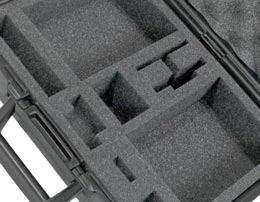
  • A case designed around the product. The interior is cut for your equipment, so it presents well the moment the customer opens it.
  • A supply chain that does not need managing. One order, one delivery to track, one company answering the phone.

The case is part of the product experience

For a lot of equipment, the case is the first thing the end customer touches. A fitted interior that presents the product cleanly — everything in its place, nothing rattling, the manual in a die-cut flap in the lid — does real work for how the product is perceived. A loose product in an oversized box does the opposite, and it costs about the same to ship.

Avoiding a tooling charge

The biggest single lever on OEM case cost is whether the shell needs new tooling. There are more than 100 standard sizes across our four case families, and a standard shell with a custom foam interior avoids a mold charge entirely. It is worth checking the published size charts before assuming a custom mold is required — our guide to whether you need one covers how, and where custom tooling genuinely earns its cost at high annual volume.

Which case family suits OEM work

  • Blow Molded — the most common choice. Durable, economical, and the widest range of stock sizes.
  • Thermoformed — lighter, with 40 standard footprints and depth available to order, so it often fits an awkward product without tooling.
  • Heavy Duty Watertight — when the product ships into the field or the case has to be sealed.
  • Soft Sided — custom designed for lighter kits where a hard shell is more case than the job needs.

Branding and part numbering

Hot stamping, molded logos, engraving, printed and in-mold labels and logo plates all put your identity on a molded case, and custom molded colors carry it further. Inside, interior labels and die-cut flaps hold part numbers, instructions and documentation exactly where the end user needs them.

Planning past the first order

Quote your realistic annual volume rather than a first order in isolation — it changes what we recommend, not just the price. If you expect variants, say so early: one shell with two or three foam layouts is usually cheaper and far easier to manage than several different cases. Ordering carrying cases in bulk covers the rest.

Specifying an OEM case?

Send us the product dimensions, expected annual volume and any branding requirements. We will come back with a case family, a size and an interior.